
Transforming Local Maple: Our Journey from Tree to Stunning Live Edge Kitchen Countertop

Bringing a kitchen countertop to life from the very trees growing on the property is a rare and rewarding experience. Recently, we completed a project where we cut down maple trees right on the site, milled the wood, and crafted it into a live edge kitchen countertop installed in the same home. This post shares the detailed journey of transforming local maple wood into a beautiful, functional centerpiece for a kitchen.

Selecting and Harvesting the Maple Trees
The project began with identifying the right maple trees on the property. Maple is prized for its hardness, fine grain, and warm tones, making it an excellent choice for kitchen surfaces. We chose mature trees and only trees that were exhibiting signs of illness so as to keep the overall yard appeal for the home owner.
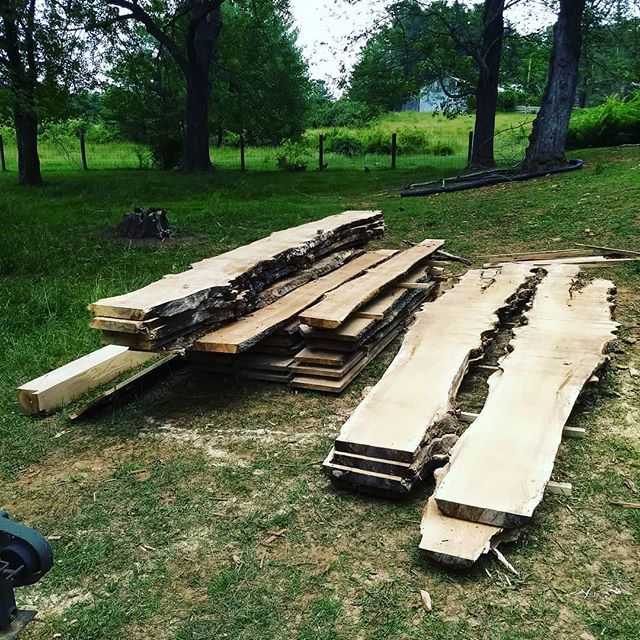
Cutting the trees required careful planning to avoid damage to surrounding structures and other trees. and to ensure safety. Once the trees were safely cut down we brought in the mobile sawmill to start cutting the logs into 2 inch thick slabs.
Milling the Logs into Slabs
Once the logs were cut into slabs suitable for countertops. We had to wait a few months for the wood to acclimate and dry enough to be brought to a kiln. We opted for slabs that retained the natural edges of the tree, known as live edges, to highlight the organic shape and grain patterns.
The slabs were then stacked with spacers to allow air circulation for drying. Proper drying is essential to prevent warping or cracking later. Depending on the moisture content, drying can take several weeks to months. In this case, the slabs were air-dried for three months before moving them to a kiln where they finished out the drying process in two more months.
Preparing the Wood in the Workshop
Once the slabs reached the workshop, the real craftsmanship began. We started by flattening the slabs using a wide planer and joiner to create a smooth, even surface while preserving the live edges on select pieces for the outside edge of the countertop. Any cracks or knots were stabilized with epoxy resin to maintain strength and aesthetics.
Next, we sanded the slabs progressively with finer grits to bring out the maple’s natural luster. The live edges were carefully cleaned and lightly sanded to retain their rustic charm without roughness.
Designing the Countertop to Fit the Space
Since all the wood came from the same property, the countertop carries a unique story and connection to the home. We measured the kitchen space precisely and designed the countertop to fit perfectly, including cutouts for the sink and stove.
The natural curves of the live edges required custom fitting and adjustments. We worked closely with the homeowner to ensure the final shape complemented the kitchen layout and style.
Finishing Touches and Installation
For finishing, we applied several coates of epoxy that enhance the maple’s color and grain while protecting the surface from moisture and stains. The finish also gives the countertop a warm, and shiny inviting glow.
Installation involved securing the countertop on sturdy cabinets and ensuring all edges aligned perfectly. The live edge brings a natural, organic feel to the kitchen, making it a focal point that blends craftsmanship with nature.
Why Using Local Wood Matters
Using wood from the same property where the countertop is installed adds several benefits:
Sustainability: It reduces the carbon footprint by eliminating transportation and supports responsible tree harvesting.
Connection: Homeowners develop a deeper bond with their space knowing the wood has a local origin.
Uniqueness: Each slab tells a story of the land, making the countertop truly one-of-a-kind.
Tips for Homeowners Considering Live Edge Countertops
If you’re thinking about a live edge countertop from local wood, here are some practical tips:
Choose the right species: Maple, walnut, cherry, and oak are popular for durability and beauty.
Plan for drying time: Properly dried wood prevents future issues like warping.
Work with skilled craftsmen: Live edge work requires experience to balance natural beauty with functionality.
Consider maintenance: Oil finishes need periodic reapplication to keep the wood protected.
Embrace imperfections: Knots, cracks, and natural edges add character and uniqueness.
Final Thoughts on Our Maple Countertop Project
Transforming local maple trees into a live edge kitchen countertop was a fulfilling process that combined nature, craftsmanship, and design. The result is a stunning, durable surface that connects the home to its surroundings in a meaningful way.
Comments